UA President Peter Mohler on AI, Nursing and Building a “University for Alabama”
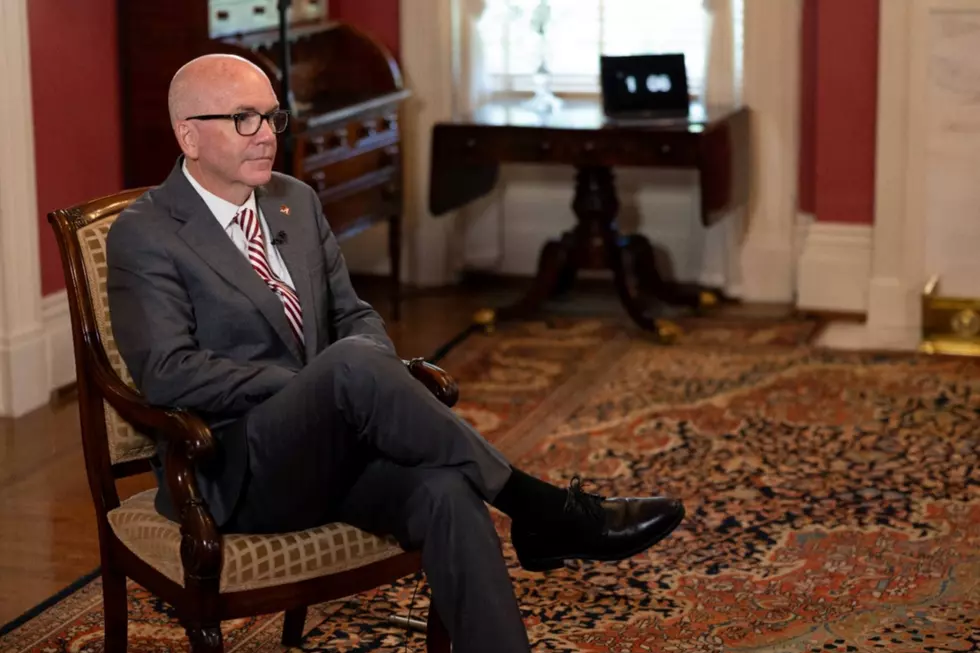
Ahead of his second academic year as president of the University of Alabama, Dr. Peter Mohler sat down with the Tuscaloosa Thread for a wide-ranging conversation about the university's "Future Ready" framework, its embrace of artificial intelligence, the new School of Data Sciences and the state's looming nursing shortage.
Mohler, who succeeded Stuart Bell as UA's president in 2025, spoke as students returned to campus for the fall semester.
The questions below have been edited for length and clarity. Mohler's answers appear as he gave them. Links have been added to previous Thread reporting or to University of Alabama sites for those who want to read further on any topic.
The Thread: In your Future Ready Framework, it seems like you want what happens on campus to be more relevant to those who live off-campus, like much of the Thread readership. What does that look like for Tuscaloosa, and what might it manifest as in the next three to five years?
DR. PETER MOHLER: "Well, most simply put, we've been the University of Alabama for 196 years, and the history of this place is incredible. I'd like for your readership to think of us as the University for Alabama. And that means a little bit different things to every one of your readers. Whether it's making sure that we have nurses to meet the shortage of nurses here locally, at the county and statewide level, or even nationally, or ensuring that we're leading in areas of artificial intelligence — leading it, instead of it leading us. Or thinking about innovation and entrepreneurship so that, here in Tuscaloosa, we ensure that when we lose a tire factory or a manufacturing plant, we're looking at new technologies and advanced manufacturing where some of our scientists can create new industries. To me, it's not just about what happens within the boundaries of our classrooms. It's about knocking down those walls and ensuring that our students understand what the big problems are out there in our state and our nation today — and educating them in ways where they're the ones at the table, in the room, solving those questions and coming up with really great ideas to change the future of the state."

The Thread: I'm glad you brought up AI. You've got this new AI policy, an AI hub with a list of models and what students and faculty can use them for. Can you sum up those changes and why the university chose to embrace AI in this way? What can students do with it now that maybe they weren't able to last year?
MOHLER: "I remember having the same conversations when I was in college or high school or graduate school about computers, or the internet, or a graphing calculator. So the questions we're addressing today are not new questions, but it's very important that we create policies and make sure that when we're using emerging technologies — whether it's computers or the internet or cell phones or artificial intelligence — we're doing it responsibly. A big part of that, as you know from your own work, is not just the process of AI but the data behind it. Making sure our students understand that just because it's data doesn't mean it's good data. Very often, a small, limited data set is better than the entire internet. So it's really important, when our students are making decisions or solving problems, that they understand the sources of the data, how they use it, and how they apply it. And they need to understand the ramifications, that if you have flawed AI, you're going to have flawed outcomes and flawed solutions. A big piece of this is teaching our students responsible use."
The Thread: Can you point to anybody who's been pushing the boundaries, or a case recently that has shaped the way you or UA are thinking about these policies?
MOHLER: "I'm going to point to us, because a big piece of this is that it can't just be our students. It needs to be our campus and our state. This last year, we built a program to teach data use and artificial intelligence for our staff and faculty. We want to make sure that when you think about innovation, it's not just the research labs that are being responsible in how they use AI. We believe that as a state, we need to get out ahead of this. As we think about companies or industries that might be thinking about moving to Alabama, we want to be at the forefront of these technologies. We can get behind and watch this happen, or we can lead in these spaces. I want our community and our state to have access to the best tools. But I also want to make sure we have policies to ensure that we use them in a way that's ethical and responsible."

The Thread: Let's talk about the new School of Data Sciences that will be studying and teaching AI. Your vision was to see that school impact every student, faculty member, and college on campus. At the rate the technology and models are evolving, how do you develop and implement a curriculum that stays relevant?
MOHLER: "A lot of what we think about with emerging technologies is that we continue to evolve with it. If you're a freshman taking courses in the School of Data Science next year, those courses are going to change by the time you're a junior. We're going to continue to iterate and evolve our curriculum to align with what's happening in the world around us. A big part of my job is to make sure we're listening to what's happening in areas like companies coming up with new algorithms, or applications in manufacturing, or the future of outer space, so that we're not only understanding the foundational pieces of data science but also the applied pieces. Our students, when they graduate, need to be ready to take jobs that allow them to be leaders in these fields. So it's going to be a continued iteration of curriculum to align with the evolution of the technologies."
The Thread: When you think about AI's impact — and this new school's impact — on some of the fields of study or work that may be threatened by the development of these technologies, how concerned is UA with the impact on those career fields and the schools that have existed here long before the new school was developed?
MOHLER: "I'm very proud that the colleges across the University of Alabama have already been using AI in the classroom for many years. Whether you call it data science or artificial intelligence — in business, in nursing — these are practices we've been using for years now. The goal of the new school is to make sure that we're united in how we do these things together. When we connect the dots of the problems we're going to be solving as a University or as a state, we're able to use data from health care, data from the economy, data from energy, and put these together to come up with really cool ideas for solving big problems, having this united approach, where it doesn't all just sit in engineering, doesn't all just sit in business. The best innovation happens at the intersection of disciplines. That's the goal of this new school."
The Thread: A UA announcement predicts a major shortage of nurses in Alabama getting worse this decade. Are the efforts to double enrollment and get another 550 nurses out each year going to keep up with demand? And what has to go right to double the output of trained nurses from the University of Alabama?
MOHLER: "The first piece is recognizing there's a problem. Hopefully your readership has seen that we recognize it. Right now there's a shortage of 13,000 nurses. In five years, it's going to be 38,000 nurses. So we have to be intentional about this, and we have to make sure that we're doing our part to address it. The second piece is making sure that those nurses have access to opportunities and stay in the state of Alabama. It's great to solve problems in other states, but we're the University of Alabama. A big piece of what we're doing is making sure these nurses, when they train here, have the opportunity for great jobs. We're spending a lot of time across all 67 counties, meeting with hospitals and small clinics, ensuring that our students can get great jobs right here in this state."
THE THREAD: I know we're probably coming up on the end of our time, but I just want to leave an open door for you to touch on anything we haven't talked about.
MOHLER: "We started a second new school this year: the School of Leadership and Policy. So just as we're looking at emerging technologies and things like AI and data, one thing that I've heard from the community, whether here in Tuscaloosa or across the state, is that we have great students who are disciplined, but if they have these extra little pieces on the leadership side, whether its working in teams or internships or experiential learning that can allow them to integrate quicker within in our disciplines or our companies, boy, that would be great. This new school is designed to do just that and make sure that when you're looking in Montgomery, or in DC, or in the courtroom or the boardroom, we make sure that those are students from the University of Alabama whenever possible."
The Thread: How do you find the students who'll be touched by that leadership school if they're in nursing or journalism or engineering, but need that leadership development?
MOHLER: "I plan that all students, when they graduate, just like the AI fluency, is that they're going to have the leadership fluency. Some may decide to choose to major in it or get a PhD in it, but I would like every one of our students, whether they're a nurse or a business student or involved in public health, to be able to understand the principles and the foundational processes involved in leadership."
Classes at the University of Alabama began for the new academic year earlier this week.
The Thread is grateful for our time with President Mohler and the opportunity to share his vision with the Tuscaloosa community.
For more exclusive coverage of the University of Alabama and other institutions in West Alabama, stay connected to the Tuscaloosa Thread.
Top Stories from the Tuscaloosa Thread (8/10 - 8/17)
Gallery Credit: (Stephen Dethrage | Tuscaloosa Thread)
More From Tuscaloosa Thread