
Jury to Begin Deliberations in Capital Murder Trial of Luther Watkins
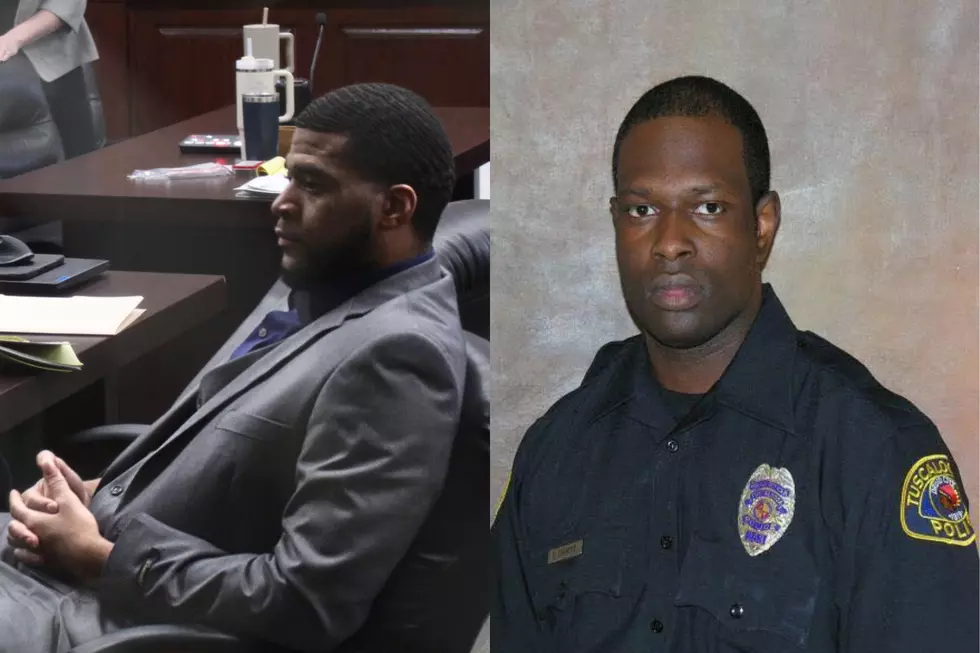
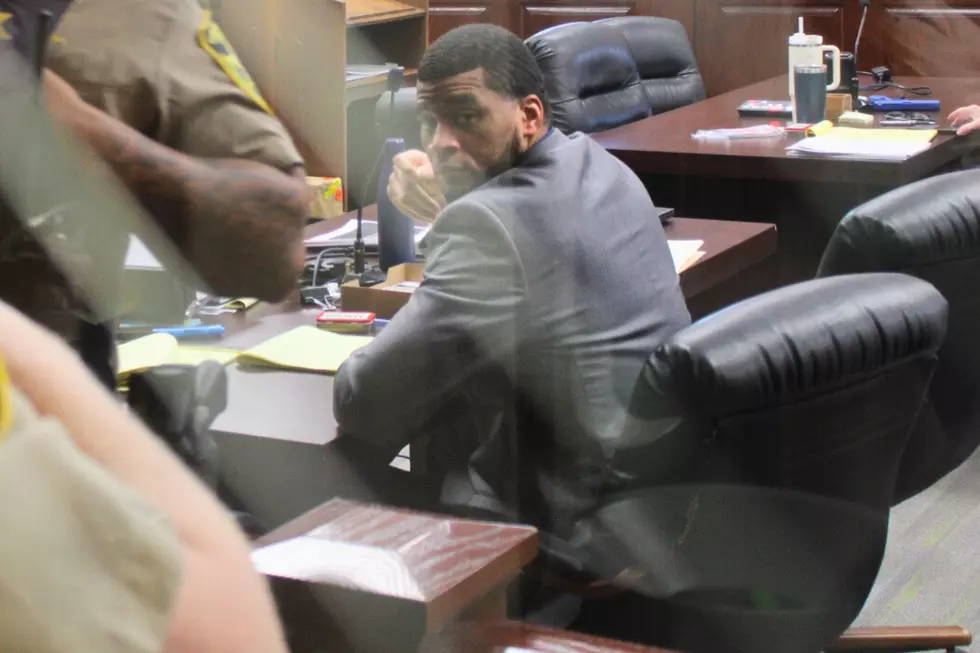
The defense rested, and both sides gave closing arguments Friday morning in the ongoing murder trial of Luther Watkins Jr., leaving the jury to begin deliberations after lunch.
As the Thread reported, Watkins took the stand himself on Thursday afternoon and was the defense's final witness. As soon as the court resumed Friday morning, the defense rested its case.
Afterwards, prosecutor Paula Whitley Abernathy gave closing arguments for the state, Justin Forrester and Chris Daniel did so for the defense, and District Attorney Hays Webb had the final word before the jury broke to elect their foreperson.
No electronic devices are being allowed inside Judge Brad Almond's courtroom for the duration of the trial, so the reporting below is done without the benefit of a transcript.
READ MORE: Catch up on extensive coverage of the case and trial so far at this landing page.

Prosecutor Paula Whitley Abernathy
Chief Assistant District Attorney Paula Whitley Abernathy spent much of her closing argument reminding the jury what Watkins admitted under oath Thursday.
She said Luther Watkins knew he was wanted on robbery and assault charges on September 16th, 2019, knew he wasn't supposed to have a gun while out of jail on bond, and knew that Dornell Cousette was an officer with the Tuscaloosa Police Department.
She said Watkins knew why Cousette was there and heard his command, "Don't you run!"
The state and defense disagree whether Investigator Cousette disobeyed orders or just ignored advice when he tried to arrest Watkins without backup, but Whitley said that's not the point.
"The defendant is the only person there who disobeyed an order," she said.
She said the gunfight that wounded Watkins and killed Cousette could have been avoided if the 20-year-old fugitive had simply surrendered in the front yard and not run inside the home.
Prosecutors say that once inside, Watkins drew a gun before Cousette shot him in the back, although no witness has testified to seeing Watkins draw his weapon when fleeing from Cousette. Whitley Abernathy said it was absurd to believe the Investigator shot Watkins in the back, then allowed him to pull a gun from his waistband and return fire.
The defense is going all in on the self-defense argument, and Whitley Abernathy told jurors they should convict Watkins of capital murder.
"This defendant claims he was acting in self-defense," she said. "He saved his own life by murdering Officer Cousette. That does not make it self-defense."
She talked about Cousette's other roles - a father of two daughters, a fiancé, a military veteran, a school resource officer, and a juvenile investigator who loved West Tuscaloosa and the citizens he served and protected.
"Luther Watkins is the person we call the police to come and get, and we need them to be safely able to do their jobs. Danger is a risk, but getting murdered cannot be acceptable," she said. "I ask you to return a guilty verdict. He is guilty."
Justin Forrester & Chris Daniel
The defense's closing arguments came from Justin Forrester and Chris Daniel, who split their time and spent far longer than Whitley Abernathy speaking directly to the jury and asking them to acquit Luther Watkins.
The third attorney on the defense team, Scott Brower, missed the closing arguments for a pre-existing medical appointment he could not reschedule.
Although one witness for the state testified that Cousette was on duty at the time of the deadly shooting, Forrester said another witness testified that he was off-duty, and the state never presented any documentation proving that Cousette was on the clock that night.
Forrester also suggested again that Cousette was acting against the orders of night shift supervisor Bobby Windham, who told him that night that no backup was available and he should not go to 33rd Avenue to attempt to apprehend Watkins by himself.
Windham testified earlier this week that he and Cousette worked in different divisions, and although he was a shift supervisor that night, he had no authority to "order" Cousette to do or not do anything. Forrester questioned that rationale.
Forrester said in order to convict Watkins, the jury must see proof beyond a reasonable doubt that he committed capital murder and was not acting in self-defense.
But none of the state's 17 witnesses testified about what happened inside the house where the shooting actually happened. The four young men Watkins was hanging out with were still outside when the shots rang out. One woman inside the house was in a different room, and another was asleep. Cousette was not wearing or using a body camera that night.
So, although Watkins and his attorneys acknowledge that he shot Cousette fatally, they also maintain that Cousette shot Watkins first, in the back, before Watkins was holding his own gun. They said that in returning fire, Watkins was only trying to prevent himself from being "executed" on the floor.
Forrester passed the reins to defense attorney Chris Daniel, who urged the jury to find Watkins not guilty.
Daniel said Cousette acted rashly and in violation of best practice and either his supervisor's orders or advice when he hunted Watkins down without backup and got out of his unmarked car with a gun in hand.
Watkins knew he had warrants, but also knew he didn't want to die, Daniel said, and he ran away from what he perceived to be two men jumping from cars, pointing weapons at him.
Neither the warrants nor fleeing from arrest gave Cousette the right to administer the death penalty to Watkins by shooting him in the back, Daniel said.
"There is no evidence for you to even consider that Luther Watkins drew a gun before Dornell Cousette shot him," Daniel said. "The hard thing and the right thing are rarely the same. But it is right, legally correct, to acquit this man."
District Attorney Hays Webb
Because the state has the burden of proof in criminal courts, District Attorney Hays Webb was given the opportunity to have the last word and give his final thoughts to jurors before they broke for afternoon deliberations.
Webb presented the case as a battle between the truth, as presented by the state, and the defense's "amorphous, shifting" version of events. Webb criticized defense attorneys and witnesses for using information presented at trial to later amend their 3D models and accounts of events.
He said forensic experts testified that Watkins could not have been shot in the back while he was standing or running straight away from Cousette. Only then did the defense begin to claim that Watkins tripped over the threshold of the door and was shot in the back as he stumbled.
Webb said the state's "truth" has never changed - Watkins ran inside, stopped just within the door, drew a gun from his waistband, and twisted his head and shoulder to point the weapon with his right hand under his left elbow, sort of crouching and twisting to take aim at Cousette.
Webb said that's a better explanation of how Cousette's first shot hit the center mass of Watkins' back, but the bullet ended up behind Watkins' right shoulder instead of punching straight through him.
When Watkins fell to the floor and aimed at Cousette's head, Webb said he got another shot off but it wasn't enough to stop the threat. Cousette was fatally wounded, and Watkins fled the scene.
Webb said just because there is no video evidence of the shooting and no witnesses testified to the order of events, Watkins cannot be allowed to get away with killing Cousette.
"It is true that he, Luther Watkins, killed Officer Cousette in the line of duty," Webb said.
With both closing arguments concluded, the jury chose their foreperson late Friday morning and will return after lunch to begin deliberations. That could take minutes, hours, or days as they work through whether Watkins is guilty or not guilty of capital murder.
In some cases, the defendant can agree to lesser included charges - for instance, the jury determines someone is not guilty of murder but is guilty of manslaughter.
Watkins declined that opportunity and will either be convicted or acquitted of capital murder.
If convicted, the only sentencing outcomes available are life without the possibility of parole or the death penalty. DA Webb has said the state intends to seek the latter.
For ongoing coverage of the verdict as this trial finally wraps up, and for other crime and courts news from around West Alabama, stay connected to the Tuscaloosa Thread.
Top Stories from the Tuscaloosa Thread (1/26 - 2/2)
Gallery Credit: (Stephen Dethrage | Tuscaloosa Thread)
More From Tuscaloosa Thread