
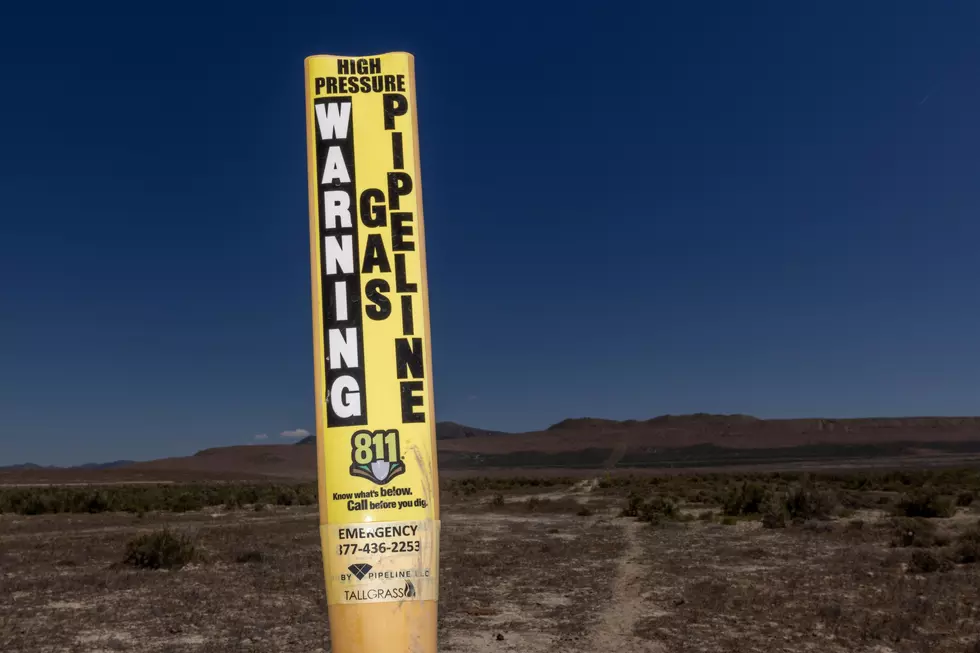
Lawsuit Challenges Permit Behind Gas Pipeline to Cross West Alabama Waterways
A Birmingham-based river advocacy group that patrols waterways across West Alabama is among five conservation organizations suing the U.S. Army Corps of Engineers over a federal permit that a proposed natural gas pipeline would use to cross more than 1,300 streams, rivers and wetlands along its route.
The Black Warrior Riverkeeper joined Alabama Rivers Alliance, Healthy Gulf, Ogeechee Riverkeeper and Savannah Riverkeeper in the lawsuit, filed last week in the U.S. District Court for the District of Columbia. The Southern Environmental Law Center is representing the five groups.
The suit does not directly target the pipeline or its developer. Instead, it challenges the Corps' 2026 renewal of Nationwide Permit 12, a general federal permit that lets pipeline builders cross waterbodies without a project-specific review or public comment period. The groups argue the permit violates the Clean Water Act, Endangered Species Act, National Environmental Policy Act and Administrative Procedure Act, and they are asking the court to throw it out.
At the center of the case is the South System Expansion 4 project, or SSE4, a natural gas pipeline expansion that would run through Mississippi, Alabama and Georgia.

The project is being developed by Southern Natural Gas Company, which is jointly owned by Kinder Morgan and Southern Company, along with Kinder Morgan subsidiary Elba Express Company.
A Kinder Morgan fact sheet describes SSE4 as an approximately $3.5 billion project that would add up to 1.3 billion cubic feet per day of natural gas capacity by adding loops and compression across about 290 miles of existing pipeline corridors, carrying gas from receipt points as far west as Clarke County, Mississippi to points as far east as Savannah, Georgia and Aiken, South Carolina. The pipeline is also under review by the Federal Energy Regulatory Commission, which oversees interstate natural gas pipelines.
Kinder Morgan already operates natural gas pipelines through the Tuscaloosa area and across much of Alabama, where the company says it runs about 3,000 miles of pipeline in 41 counties. The SSE4 work, though, would run through the southern counties of the Thread's West Alabama coverage area in Sumter, Marengo, Hale and Perry Counties before continuing east through another half-dozen counties and entering Georgia past Auburn.
According to the complaint, the developer plans to use Nationwide Permit 12 to authorize more than 1,300 waterbody crossings for SSE4. In some stretches, the filing says, the pipeline would cross 55 waterbodies per mile, or about one every 96 feet.
At one location, the complaint says the route would cross a single stream, Kimbrough Creek, six times in one-tenth of a mile. The project is estimated to require 136 million gallons of water during construction.
In the Black Warrior River watershed, the complaint says SSE4 would involve in-stream construction on French Creek and its tributaries. Nelson Brooke, the Black Warrior Riverkeeper, said in a statement that streams like French Creek are essential to the lower Black Warrior watershed's flows, wetlands, fishing and hunting. He called trenching a pipeline through creeks and wetlands "shortsighted and unnecessary."
SSE4 is one of two connected Kinder Morgan projects named in the lawsuit. Together with the Mississippi Crossing project, a separate pipeline proposed by Kinder Morgan subsidiary Tennessee Gas Pipeline, the two would lay nearly 500 miles of new pipe. The groups say the combined projects would cross more than 2,200 waterbodies and clear vegetation across more than 11,000 acres, which the plaintiffs compare to roughly 8,300 football fields.
Nationwide permits are meant for activities with minimal environmental effects, but the groups argue the Corps has stretched Permit 12 to authorize projects that span hundreds of miles and thousands of crossings.
"This permit is a hall pass for companies to dodge compliance with environmental laws," SELC staff attorney Spencer Scheidt said in a statement.
The lawsuit says the Alabama portion of the SSE4 route passes through 10 counties. Cindy Lowry, executive director of the Alabama Rivers Alliance, said residents along that route deserve a chance to weigh in on a project that could affect their health and their waterways, and that routing it under Nationwide Permit 12 "robs them of that opportunity."
The other groups raised concerns in their own regions. Healthy Gulf water program director Andrew Whitehurst warned that the Mississippi Crossing crossings on the Pearl River and its tributaries sit upstream of a drinking water source for Jackson, Mississippi. Ogeechee Riverkeeper's Damon Mullis said the construction could affect sensitive species and ecosystems in the Ogeechee River basin, and downstream "for miles."
If the court sides with the groups and vacates Nationwide Permit 12, the pipelines could still be built, but the developers would have to seek individual Clean Water Act permits. Those require the Corps to weigh less damaging alternatives at each crossing and to open the decision to public comment.
Kinder Morgan's fact sheet anticipates construction beginning in the fourth quarter of 2026, and the lawsuit says construction of SSE4 and Mississippi Crossing is set to begin this fall.
For more exclusive coverage of energy and environmental issues in West Alabama, stay connected to the Tuscaloosa Thread.
Top Stories from the Tuscaloosa Thread (7/27 - 8/3)
Gallery Credit: (Stephen Dethrage | Tuscaloosa Thread)
More From Tuscaloosa Thread