
DCH Surgeon Hits 100th Open Heart Procedure Since January Hire, Reducing Trips to Birmingham
When Dr. Jerome McDonald arrived at DCH Regional Medical Center early this year, physicians in Tuscaloosa were performing just a handful of heart surgeries annually. Nearly everyone who needed one drove to Birmingham.
This week, he completed his 100th open-heart procedure since starting in January.
McDonald, a board-certified cardiovascular and thoracic surgeon, was hired to rebuild a service line that had gone nearly dormant. The turnaround means fewer and fewer patients are going to UAB or Grandview for critical heart surgeries they can now get closer to home.

The bulk of McDonald's work at DCH is coronary bypass surgery, along with valve procedures and operations for atrial fibrillation. He described the distinction between what he does and the stents many readers may be familiar with.
"This is open heart surgery, although we don't always open the heart per se, it's more open-chest surgery on the heart," he said. "I tend to do mostly bypass surgery here, which is bypassing around the blockage rather than a stent that just opens up the blockage itself. Bypass surgery is still the standard of care for many patients, because for certain populations, that's simply what provides better lifespan and quality of life."
One hundred procedures in roughly eight months averages to performing about three a week, and McDonald said he wants to drive that number even higher.
"Right now, it's looking like an average of 150 operations annually, although we had a lull in the summer, which often happens here and elsewhere," he said. "It seems like it's picking back up, so I'm really hoping we're on pace to 180, which would be a fairly robust program."
He said that number would put DCH roughly back where the program stood in 2009 or 2010, the high point of its recent history. Decades ago, he said, the hospital was doing closer to 300 surgeries a year, before stents and drug-eluting stents pulled volume away from surgery nationwide. His longer-term ambition is a program handling 250 to 280 cases annually.
Most of the surgeries fall somewhere between elective and emergency, and he said he's proud to offer them at DCH once again.
"Patients who need open-heart surgery have usually had a heart attack, and are not dying today. They can technically be transferred, but they're already here," McDonald said. "But you never know what's going to happen in transport, and UAB sometimes doesn't have beds. There are a handful of these first hundred cases we've done here where the patient would have been dead before they got there."
Asked about the outcomes so far, McDonald stayed humble about the life-saving work he and his team are doing.
"To say every single outcome was perfect would be a lie, because our patients aren't always well to begin with," he said. "But for the most part, yes, I think we're having very good outcomes. We have a tremendous amount of satisfaction from the patients and their families."
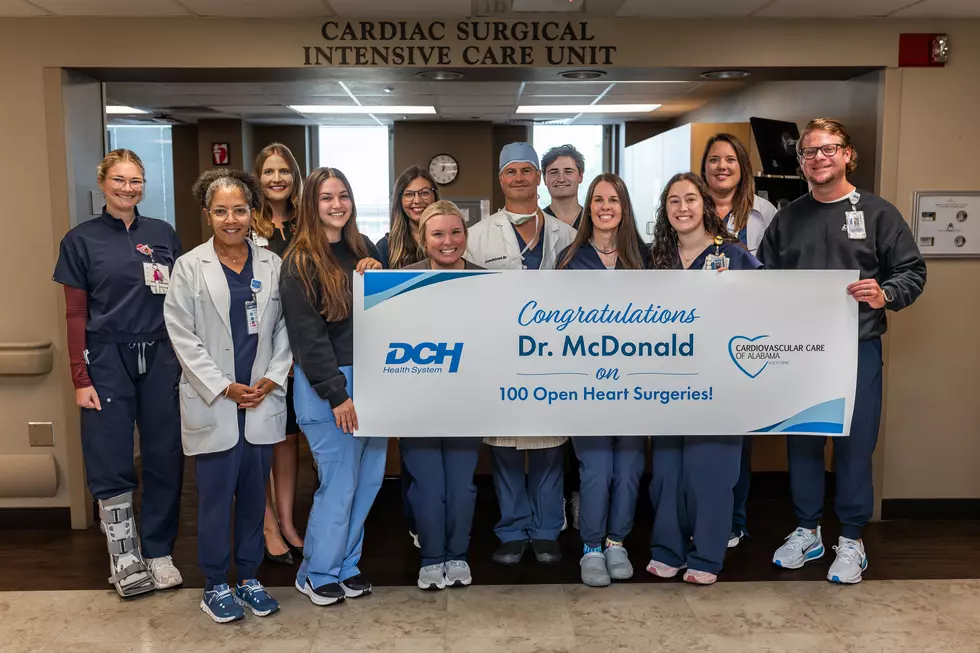
He credited a level of follow-up he said he has not seen elsewhere in his career, with the Cardiac Surgical ICU staff giving patients direct access to their cell phones and staying involved for months after discharge.
McDonald came to Tuscaloosa from Tallahassee and said in a Wednesday interview that the Druid City had never caught his eye, but the job did.
"I was a little concerned they might want someone younger, but DCH wanted someone with more seasoning who could run a program," he said. "And I like smaller programs where I have more direct control over outcomes. I didn't like being one of seven surgeons where cases are handed off every day."
DCH spokeswoman Briana Houston said the hospital is proud of how quickly the program came back under the new hire's skilled hands.
"Dr. McDonald deserves so much credit for that, for the time he has been willing to put into patients, talking to their families, and making them feel comfortable having open heart surgery performed here," Houston said. "We're really grateful for what he has been able to do for this program, for DCH, and for our community so quickly."
McDonald said he expects to launch a catheter-based aortic valve program - a more minimally invasive option - at DCH within the next year. He said he's performed those since 2016 and would like to offer that procedure here, but the necessary equipment is on order, delayed by a nationwide backorder on a critical component.
He also said he has capacity for more patients, and he is willing to consult with any patient who may have lung cancer requiring surgery.
"If people have proven heart disease, valve disease that's severe, and they want to see me, they can call and give us their information, and we would be willing to see them. We're not so busy that we can't accommodate more," he said. "I can't see everybody with high blood pressure in town — that's not realistic — but if they've got severe vascular disease and have been told something at some point, I'm willing to consider seeing them."
His office can be reached at 205-752-0694.
McDonald attended medical school at the University of Pennsylvania and completed his cardiothoracic surgery fellowship at Washington University School of Medicine at Barnes-Jewish Hospital in St. Louis.
For more exclusive coverage of health news in West Alabama, stay connected to the Tuscaloosa Thread.
Top Stories from the Tuscaloosa Thread (8/31 - 9/7)
Gallery Credit: (Stephen Dethrage | Tuscaloosa Thread)
More From Tuscaloosa Thread