IN-DEPTH: The Battle Over Alabama Data Centers Heats Up
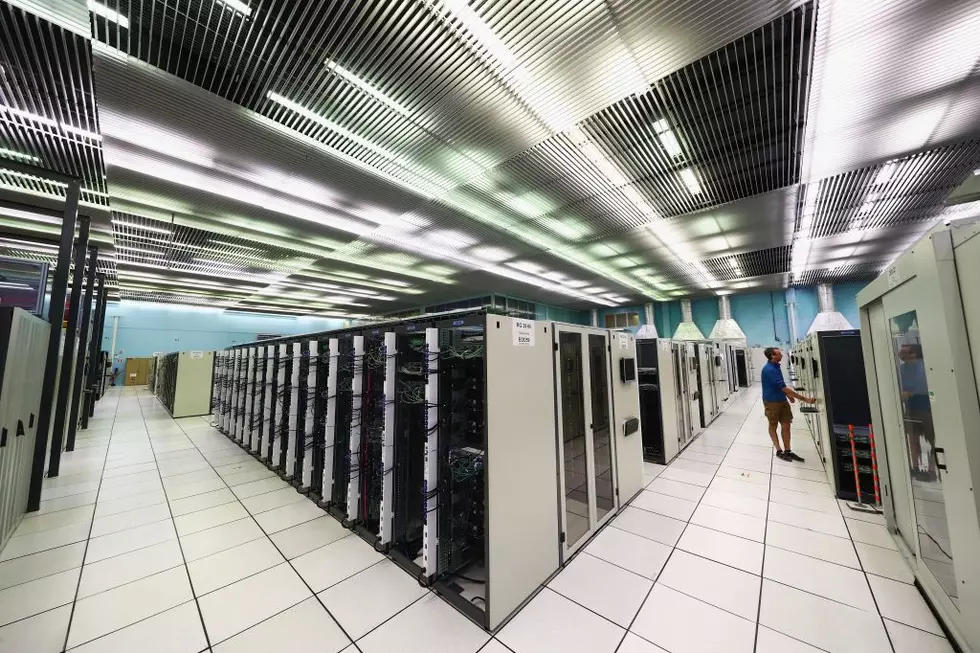
Data Centers are getting massive attention, but they are not a new phenomenon. Huge block size mainframe computer rooms came about in the 1940s But it is the recent rapid development of natural resource guzzling, acres size centers that that has prompted pushback from residents, environmental groups and some politicians.
What is Prompting the Rapid Data Center Growth?
Fueled by the artificial intelligence boom, data center development is taking place at breakneck speed across the country and around the world. The U.S. alone has over 3,000 active facilities and approximately 1,500 more in development.
The 1990s marked a period of rapid growth as the internet expanded. Businesses of all sizes began establishing on-premises server rooms and colocation centers to handle email, databases, and web services. The emergence of cloud computing in the 2000s transformed data centers into large-scale, virtualized facilities, allowing companies to rent processing power and storage on demand.
Data centers continue to evolve to support edge computing, and AIs. Modern facilities are designed for high-density processing.
Data center evolution reflects the growing demand for computing power, storage, and connectivity across industries and society.

Data Centers Proposed in Central and West Alabama
One of those in the planning stage is just across the Tuscaloosa/Jefferson County line in Bessemer. The $14.5 billion Project Marvel data center development has met significant pushback as significant utility usage by the centers have concerned residents about high residential costs. It has become a key issue in Bessemer’s mayoral runoff election, in August, with residents raising concerns about transparency and environmental impact.
In Brookwood, a Texas-based company has purchased roughly 1,200 acres of land near Brookwood Middle School for a planned $21.5 million data center. A proposed rezoning request is expected to be presented to the Brookwood Planning and Zoning Commission at its August 11th meeting.
A recent Brookwood City Council Meeting saw the body discuss some details of the potential project. While speculation is running rampant, Brookwood Mayor Joe Barger emphasizes no contract or deal has been reached.
During a recent meeting a request to pause any further action on the center or to allow a referendum was denied by the mayor.
Public rezoning and annexation petitions for the proposed center are posted at the Brookwood Police Department.
The Debate
Modern AI data centers consume as much electricity as small cities. Analysts forecast that U.S. data centers could consume roughly 8% to 12% of total national electricity by 2030, leading to massive strains on local grids.
Cooling these facilities requires millions of gallons of water daily, putting massive stress on the environment and municipal water supplies
Environmental watchdogs like Black Warrior Riverkeeper strongly oppose the developments, citing catastrophic threats to local waterways, endangered species, and community health.
To prevent sufficient public input into potential centers, end users such as Google, Meta, and Amazon employ broad nondisclosure agreements (NDAs) that prevent public officials — such as city council members, mayors, state legislators, or public economic development officials — from divulging many pertinent details of these development deals, including the identity of the project’s end user.
With midterm elections looming, the issue has grabbed the attention of Republican and Democratic candidates from city halls to courthouses, capital building and to congress.
The Project Marvel data center has become a central issue in the Bessemer mayoral race.
Because President Trump is pushing rapid expansion of data centers, most Republican candidates on all levels are backing full-throttle development.
Alabama GOP Gubernatorial nominee Tommy Tuberville strongly supports the development of data centers. “We’re going to do data centers. It will help you tremendously,” Tuberville told the Alabama Sheriff's Association Conference. “The tax money that comes from those things is unbelievable for schools, for law enforcement, for anything that’s done.” He has also claimed that local opposition to the projects may be fueled by Chinese misinformation.
“To say this opposition is coming from China is one of the most ridiculous things Tommy Tuberville has ever said, and that’s a high bar." Democrat Gubernatorial Nominee Doug Jones responded in a statement. "The people raising these concerns aren’t foreign agents. They’re Alabama families who found out about massive projects in their own communities after decisions had already been made. Instead of listening to them, Tuberville insults them."
Congressional Reaction
At least five bills have been filed dealing in some way with data centers. One of them, the Artificial Intelligence Data Center Moratorium Act (H.R. 9442 / S. 4214), is backed by West Alabama Democrat Rep. Terri Sewell.
In a social media video Sewell asked several questions, “Across the state and our district, Alabamians are grappling with the rapid expansion of AI data centers,” Sewell said in the video statement. “Many are being proposed in underserved and under-resourced rural and urban communities. These facilities come with promises of new investment, job creation, and tax revenue. But they also come with some risks and many, many unknowns.”
“How will they affect our water, our environment, our property values? Will local communities actually get the benefit that they’re being promised? Who benefits and who bears the costs?
The bill was introduced by Representative Alexandria Ocasio-Cortez, (D-New York), in the House and Senator Bernie Sanders (I-Vermont), in the Senate.
The Future
A recent poll by Politico. com found more people now oppose nearby data centers than support them. The new polling numbers are a reversal of a similar poll taken in January that found most people either supported or were ambivalent about the massive centers.
The fight over data centers is increasingly spilling into the courts, and recent developments show that developers faced with moratoriums and bans are suing to overturn them. Meanwhile, property owners, environmentalists and community groups are suing or countersuing to block, or at least delay, action on data center construction.
More From Tuscaloosa Thread